Trichopelma grande
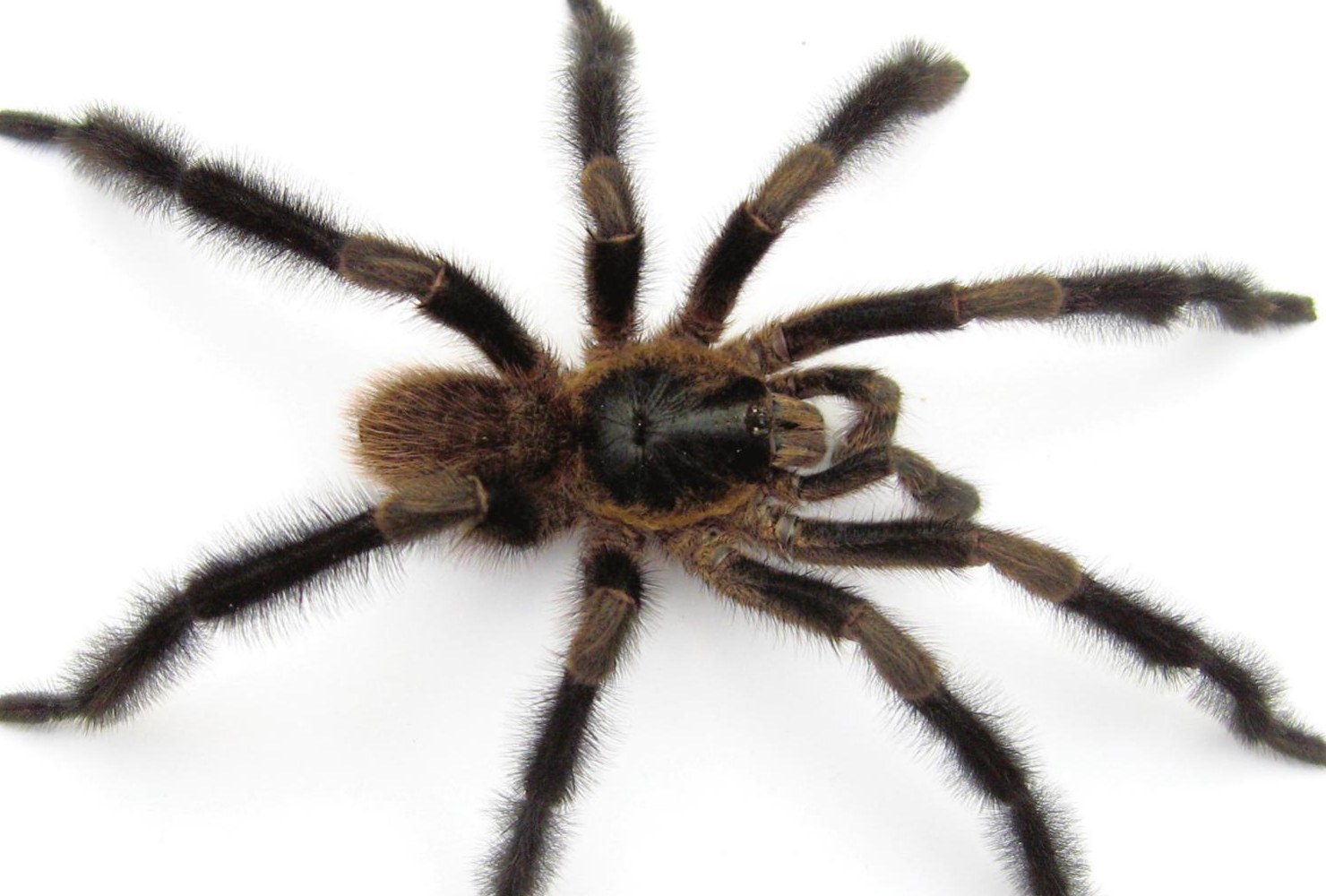 Male © David Ortiz, in Ortiz & Fonseca (2024), male holotype
Type Locality and Records
Original Description
Distribution
Type Locality: La Palma karstic sinkhole, Sierra de Quemado, Viñales, Pinar del Río, 190 m
Adult Male Activity
Collection months of 3 adult male specimen records, against the rainfall where they live
Mean monthly rainfall and temperature 2001–2020 near where these males were collected, Cuba. MERRA-2 via NASA POWER, for a grid cell averaging 110 m. Wet and dry seasons, from the rainfall at the locality itself.
Etymology
The specific epithet grande comes from the word meaning large or great in Spanish, and is intended to be used as a noun in apposition. This name was selected to reflect the species' status as the largest known within the genus Trichopelma, and serves as a nod to the geographical origin of the species, endemic to Cuba, a Spanish-speaking country.
Specimen Records (4)
Holotype male of Trichopelma grande (SMF); found wandering by midnight on the sinkhole rim, 10 m above the ground. Collected 20 April 2008.
Paratype male of Trichopelma grande (MCZ); collected 26 December 2015 as a juvenile from a trap-door burrow on the ground, moulted into adulthood on 6 February 2016.
Paratype male of Trichopelma grande (IES); found under a stone in the dark zone of a cave. Collected 22 December 2016.
Non-type male juvenile of Trichopelma grande; in trap-door burrow on the ground. Collected 12 February 2018.