Phlogiellus khampheng
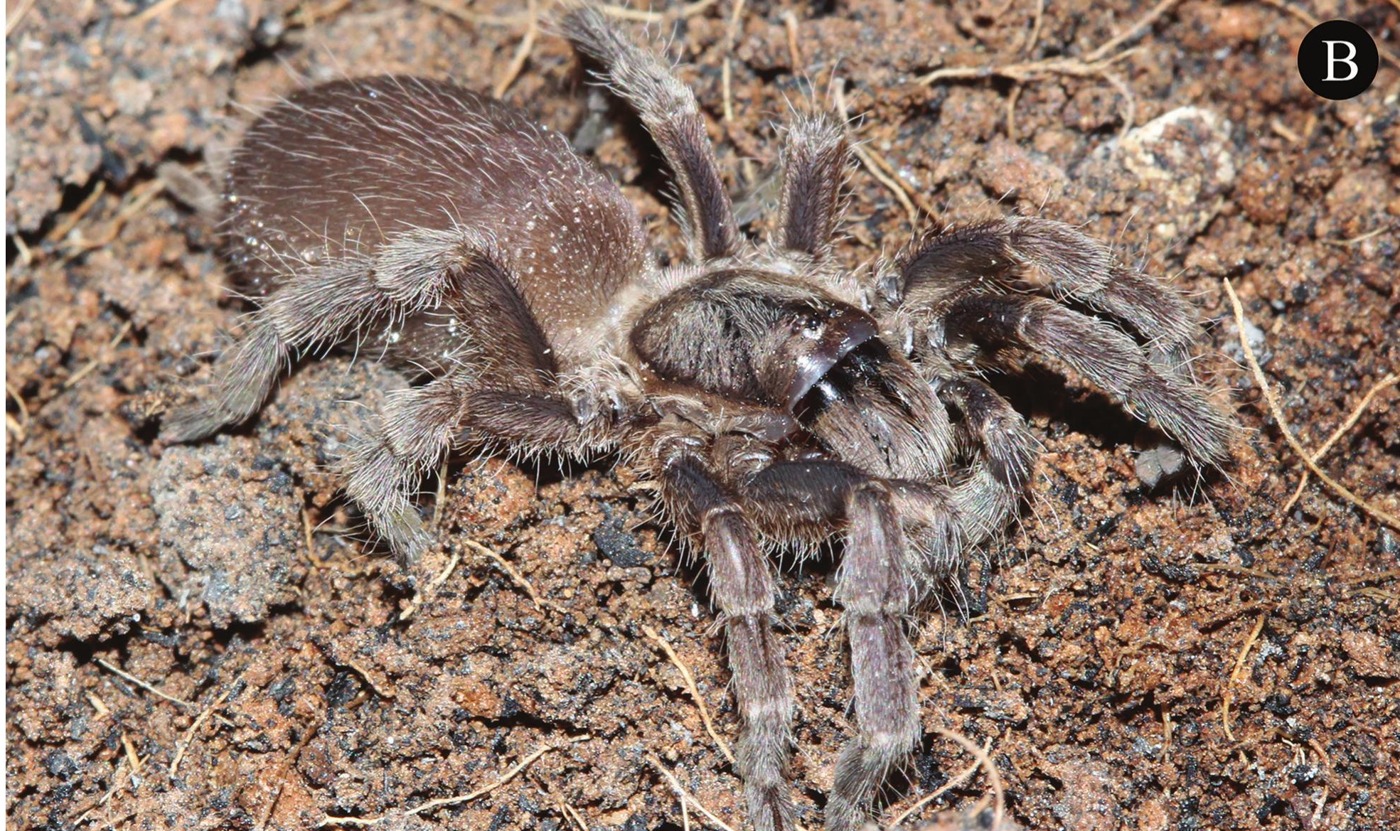 Female © Sriranan et al. (2025), fig. 2B, paratype female NUoL00058-PKP0003 alive at the type locality
Type Locality and Records
Original Description
Distribution
Type Locality: LAOS, Champasack Province, Pakse, 265 m a.s.l.
Adult Male Activity
Collection months of 2 adult male specimen records, against the rainfall where they live
All 2 were collected in August 2023, so the bars show when collecting took place, not when males are active.
Mean monthly rainfall and temperature 2001–2020 near where these males were collected, Laos. MERRA-2 via NASA POWER, for a grid cell averaging 320 m. Wet and dry seasons, from the rainfall at the locality itself.
Etymology
The name Khampheng comes from Lao and Thai, particularly in the northeastern region, where it is a term of endearment for someone cherished and precious - carrying a strong connotation of deep affection and high esteem. The authors chose it to convey the relationship between Thailand and Laos, the two countries that collaborated on the discovery, and say it symbolises the mutual respect, friendship and cooperation that made the work possible.
Specimen Records (3)
Holotype male of Phlogiellus khampheng. Total length 16.89 mm including chelicerae. Photographed alive. Deposited at the National University of Laos in the Streptaxis LA Unidentata collection.
Paratype male of Phlogiellus khampheng, same data as the holotype.
Four paratype females of Phlogiellus khampheng, same data as the holotype. PKP0003 is the described female (total length 20.92 mm) and PKP0004 the second described female (20.46 mm). Note that the type-material paragraph lists PKP0006 among these paratypes, while the natural-history text and the fig. 8 and fig. 9 captions call PKP0006 a non-type; the discrepancy is unresolved in the paper. PKP0006 is the 9.94 mm female found carrying an egg sac of seven spiderlings.