Crypsidromus carinatus Valerio, 1980
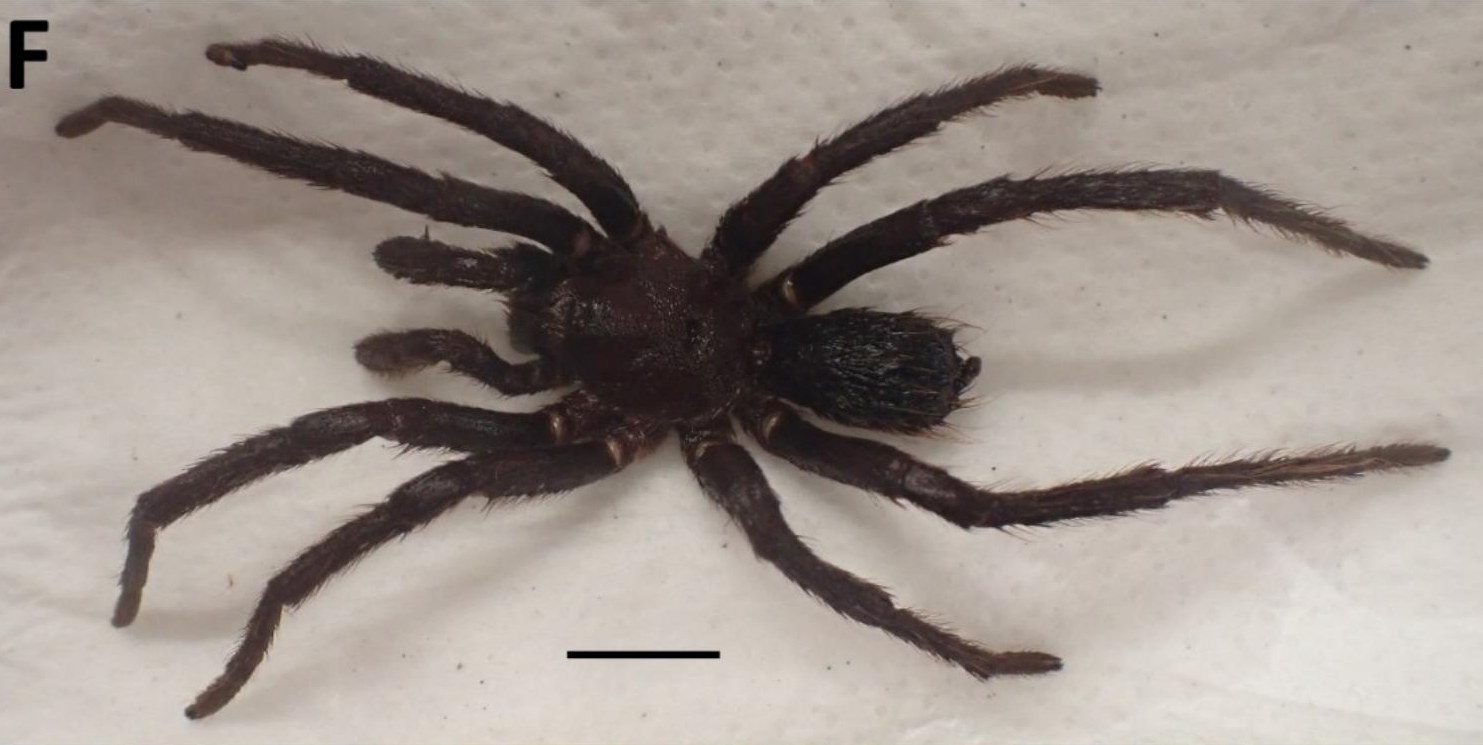 Male © Sherwood et al. (2026, fig. 4F) — non-type male MMUE G7640.1 from Macaw Lodge, dorsal habitus
Type Locality and Records
Original Description
Distribution
Adult Male Activity
Collection months of 2 adult male specimen records, against the rainfall where they live
Mean monthly rainfall and temperature 2001–2020 near where these males were collected, Costa Rica. MERRA-2 via NASA POWER, for a grid cell averaging 453 m. Wet and dry seasons, from the rainfall at the locality itself.
Specimen Records (2)
Non-type male of Crypsidromus carinatus, collected 11-18 June 2018 at the same locality, deposited at the Zoological Institute of the Russian Academy of Sciences, St Petersburg.
Two non-type males of Crypsidromus carinatus, collected 11-16 June 2019. G7640.1 is the specimen figured throughout Sherwood et al. (2026) — the palpal bulb, carapace, caput, tibia I and habitus. This is the third known locality for the species and the northernmost.
Genitalia
Taxonomic History
- 1980 Crypsidromus carinatus Valerio, 1980 — one of five Costa Rican species Valerio described in the genus, four of them from the male alone.
- The name has been moved repeatedly. Schmidt (2003) placed it in Metriopelma, following Valerio's (1982) suggestion that the two genera were partly synonymous; Pérez-Miles et al. (1996) had instead sunk Crypsidromus into Lasiodora. Bertani (2023) revalidated Crypsidromus, synonymised Proshapalopus with it, and returned this species to it.
- 2026 Sherwood et al. (2026) redescribe the palpal bulb from three non-type males in the Manchester Museum and add a third locality — Macaw Lodge at Carara, San José Province, the northernmost known and only about 60 km from the type locality of C. puriscal.
- They also decline an act they agree is warranted. Bertani (2023) had observed that the Costa Rican species do not belong in Crypsidromus and that a new genus for them was already being described by colleagues; Sherwood et al. say they agree, and explicitly leave the generic placement alone for that reason. The species therefore stays in Crypsidromus here.