Euathlus basalticus
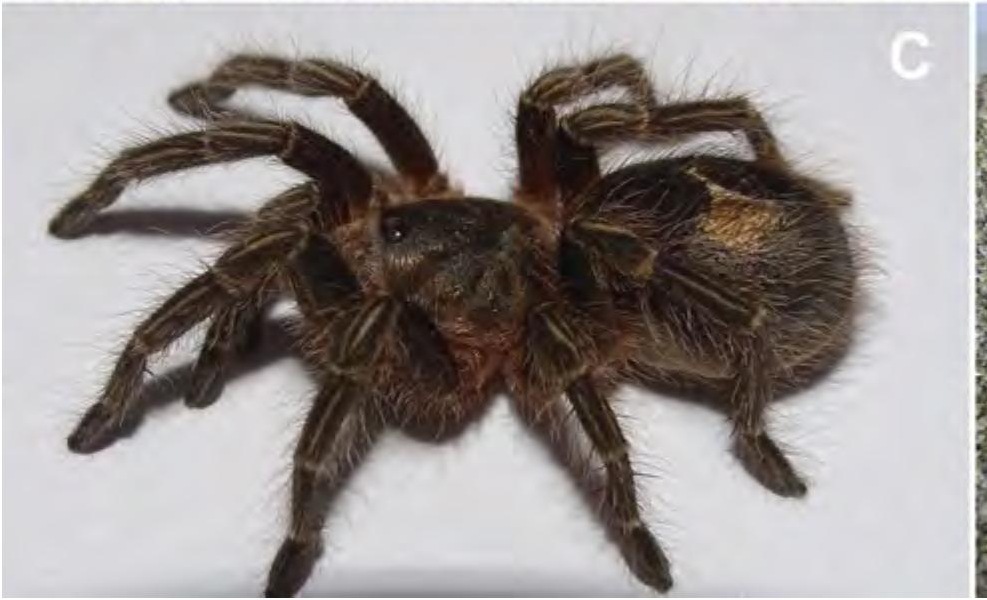 Live specimen © Allegue et al. (2025, fig. 7C) — paratype female UNS M1492, in life
Type Locality and Records
Distribution
Type Locality: ARGENTINA: Caviahue, Ñorquín Department, Neuquén
Adult Male Activity
Collection months of 1 adult male specimen record, against the rainfall where they live
Mean monthly rainfall and temperature 2001–2020 near where these males were collected, Argentina. MERRA-2 via NASA POWER, for a grid cell averaging 1388 m. Southern hemisphere — seasons are inverted, so December is midsummer.
Etymology
A Latin adjective from basaltes with the suffix -icus, "pertaining to": the species was found only on basaltic rock formations.
Specimen Records (3)
Holotype male of Euathlus basalticus. Collected on the November 2023 campaign that was mounted near the locality of the disputed E. tenebrarum paratype; its morphology settled the reassignment.
Paratype female of Euathlus basalticus
Non-type female of Euathlus basalticus — designated a paratype of Euathlus tenebrarum by Ferretti (2015) and reassigned here, having been found not conspecific with that species' holotype male
Genitalia
Taxonomic History
- 2025 Euathlus basalticus Allegue & Ferretti, 2025
- The species absorbs a specimen that had been a paratype of another species for ten years: the female MACN-Ar 32688, designated a paratype of Euathlus tenebrarum by Ferretti (2015), is not conspecific with that species' male and is reassigned here. The case was settled by additional MACN material from Junín de los Andes — three females and a male, the male matching Ferretti's original description while the females plainly did not — and then by fieldwork in November 2023 near the paratype's own locality, which produced a male matching this species instead. That male is the holotype.