Allpamayu suyuwixsa
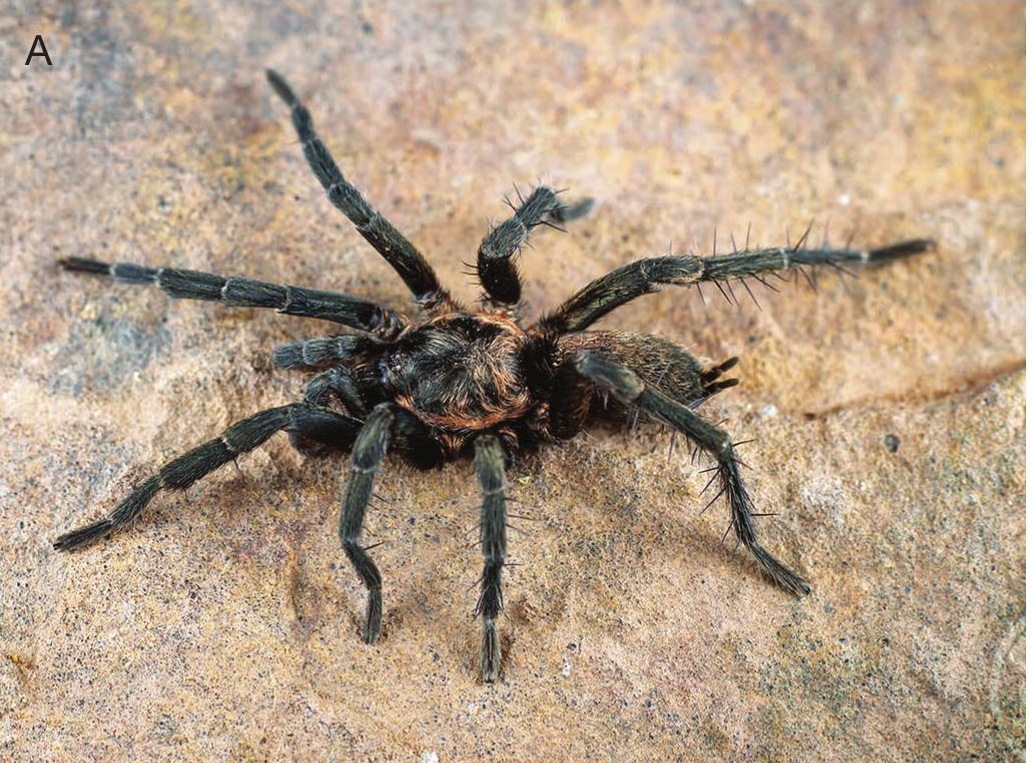 Live specimen © Beratz et al. (2026, fig. 7A) — holotype male MUBI 121 in life, Maska, Peru. Photo: Josh Allen
Type Locality and Records
Original Description
Distribution
Type Locality: PERU: Maska, Calca province, Cusco department, 3260 m
Adult Male Activity
Collection months of 1 adult male specimen record, against the rainfall where they live
Mean monthly rainfall and temperature 2001–2020 near where these males were collected, Peru. MERRA-2 via NASA POWER, for a grid cell averaging 3646 m. Wet and dry seasons, from the rainfall at the locality itself.
Etymology
From Central Quechua suyu, "striped", and wixsa, "abdomen" or "belly" — for the stripes the genus is also named after.
Specimen Records (3)
Holotype male of Allpamayu suyuwixsa
Paratype females of Allpamayu suyuwixsa, all collected on 7 October 2023. Some carried a single detached white egg sac 7-15 mm across.
Non-type material of Allpamayu suyuwixsa. MACN-Ar 46343 (1 male, 3 females) was collected on the Inca trail in January 1983 — forty-three years before the species was named.
Taxonomic History
- 2026 Allpamayu suyuwixsa Beratz, Ferretti, Chaparro, Ochoa, Allen & West, 2026
- Type species of Allpamayu by original designation, and its only species. The genus is named for Alpamayo, the 5947 m Peruvian peak often called the world's most beautiful mountain for the symmetry of the flutes on its face — which the authors saw echoed in the stripes on this spider's abdomen. Allpamayu is the Quechua form of the mountain's name.