Homoeomma vicenterojasi
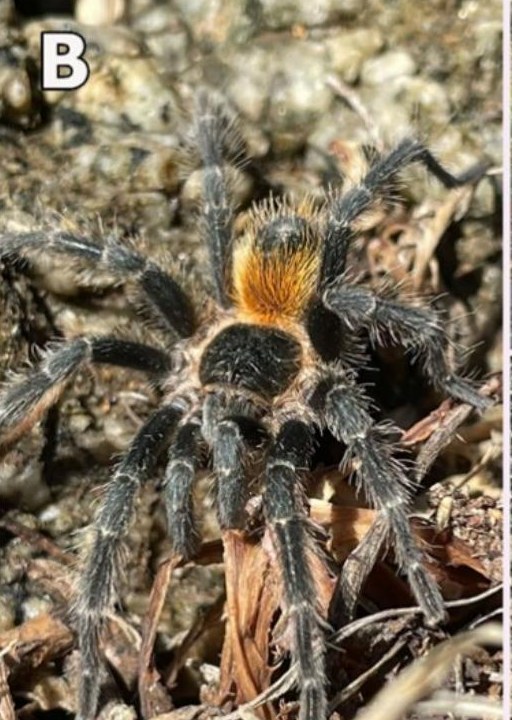 Live specimen © Montenegro Vargas, Rojas-Abarca & Aguilera (2026, fig. 3B) — the holotype male alive at Cartagena
Type Locality and Records
Original Description
Distribution
Type Locality: CHILE: Región de Valparaíso, Provincia de San Antonio, ciudad de Cartagena, 21 msnm
Adult Male Activity
Collection months of 1 adult male specimen record, against the rainfall where they live
Mean monthly rainfall and temperature 2001–2020 near where these males were collected, Chile. MERRA-2 via NASA POWER, for a grid cell averaging 232 m. Southern hemisphere — seasons are inverted, so December is midsummer.
Etymology
For Vicente Rojas, son of Eric Rojas, one of the collectors.
Specimen Records (3)
Holotype male of Homoeomma vicenterojasi, found under a rock. Total length 10.5 mm. Photographed alive.
Paratype female of Homoeomma vicenterojasi, same data as the holotype. She was living in a shallow chamber under a stone. Photographed alive.
One male and one female paratype of Homoeomma vicenterojasi, found together under a single rock in a ravine of coastal sclerophyll forest.
Taxonomic History
- 2026 Homoeomma vicenterojasi Montenegro Vargas, Rojas-Abarca & Aguilera, 2026
- The first Homoeomma recorded from the Valparaíso Region. Known from two localities about 20 km apart in San Antonio Province: the coastal cliffs at Cartagena, under xerophytic coastal scrub with Puya, cactus and chamiza, and a ravine at San Juan some 10 km inland under sclerophyll forest of boldo, peumo, litre and quillay.
- Every specimen was found under an isolated rock, in a shallow chamber rather than a deep burrow. The authors report males walking in the autumn months of April and May, generally after rain.