Reversopelma spinometatarsi
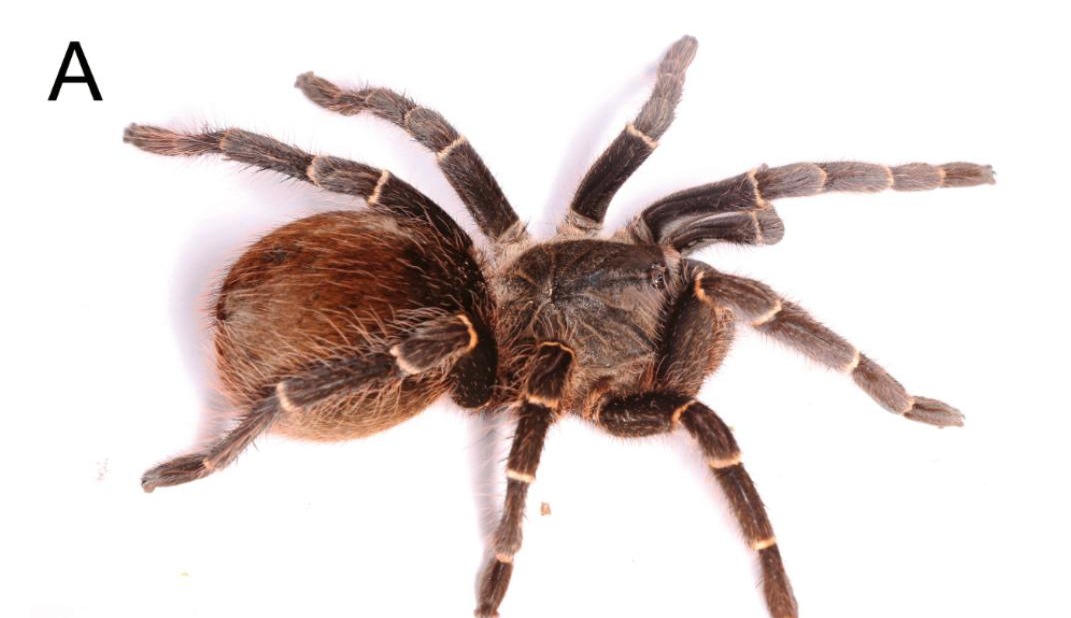 Live specimen © Peñaherrera-R. et al. (2025, fig. 9A) — paratype female ZSFQ-i12215, habitus in life
Type Locality and Records
Original Description
Distribution
Type Locality: ECUADOR: Tiputini Biodiversity Station, 0°38'12"S 76°08'59"W, 230 m, provincia de Orellana
Adult Male Activity
Collection months of 4 adult male specimen records, against the rainfall where they live
Mean monthly rainfall and temperature 2001–2020 near where these males were collected. MERRA-2 via NASA POWER, for a grid cell averaging 648 m. Wet and dry seasons, from the rainfall at the locality itself. Records span 2 countries (Colombia, Ecuador), so one climate curve cannot describe all of them.
Etymology
The specific epithet is in apposition and refers to the numerous small coarse spines on metatarsus I, the most conspicuous diagnostic character of the species.
Specimen Records (6)
Holotype male of Reversopelma spinometatarsi
Paratype females of Reversopelma spinometatarsi, same data as the holotype. ZSFQ-i12215 is the described and figured female.
Non-type males of Reversopelma spinometatarsi, catalogued as Cyclosternum by A. Silva & J. Jimenez in August 2004
Non-type male of Reversopelma spinometatarsi
Non-type male of Reversopelma spinometatarsi
Non-type male of Reversopelma spinometatarsi; collection date not recorded
Genitalia
Taxonomic History
- Reversopelma spinometatarsi Peñaherrera-R., Mora-Bolaños, Guerrero-Campoverde, León-E., Ríos-Tamayo, Gabriel, Sherwood & Cisneros-Heredia, 2025
- The second species of Reversopelma, and the first with reliable locality data. The type species, R. petersi, was described in 2001 from pet-trade material labelled only “Ecuador or Peru, Pastaza River”; its holotype is in poor condition, missing the right palpal bulb and with the embolus of the left one broken. Because R. spinometatarsi could be described from freshly collected material of both sexes, it supplied the palpal-bulb and spermathecal detail needed to redefine the genus.